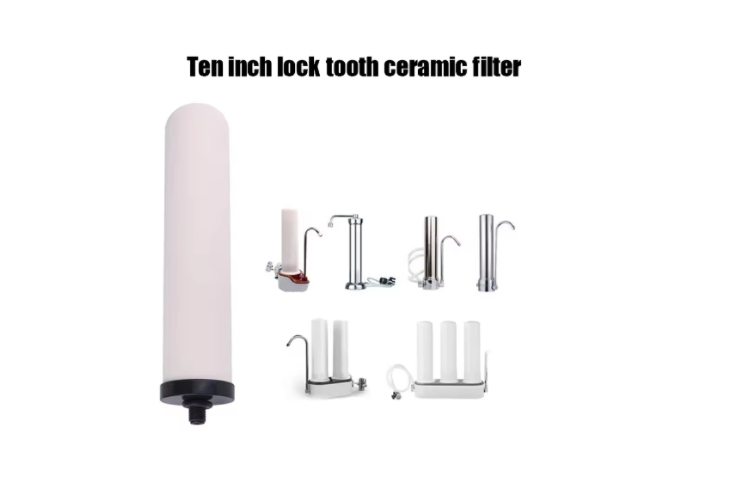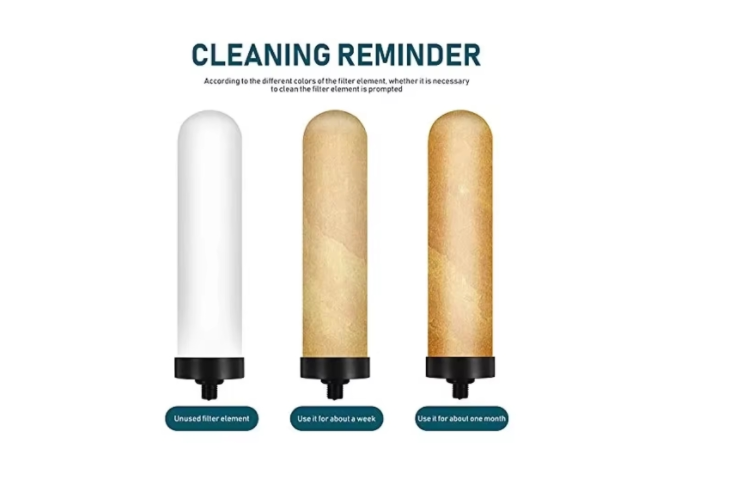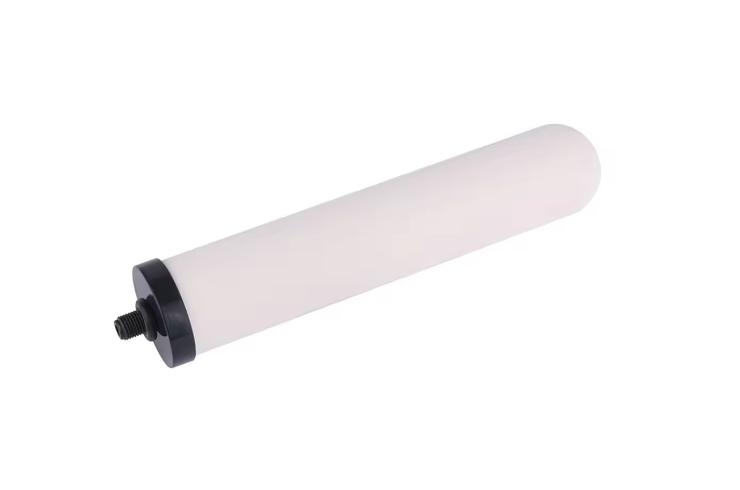
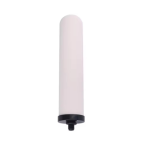
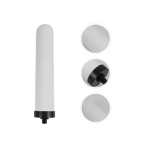
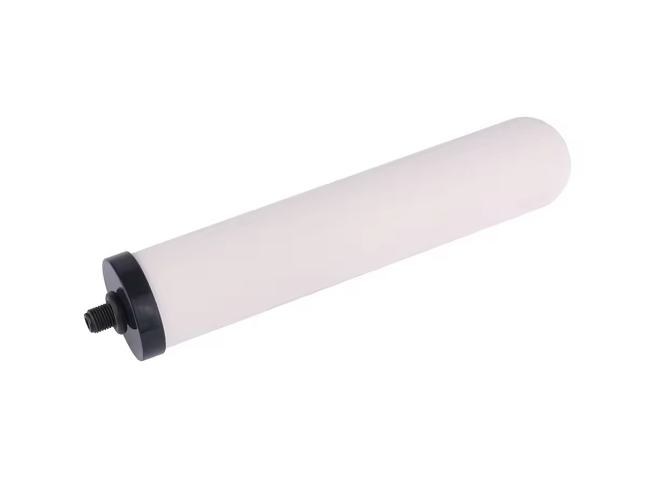
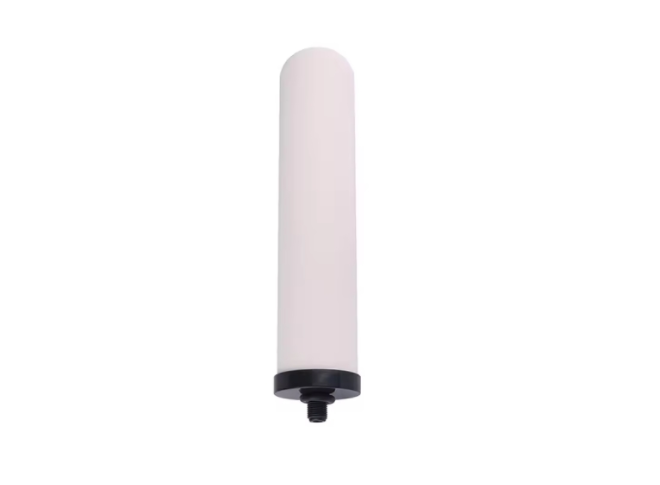
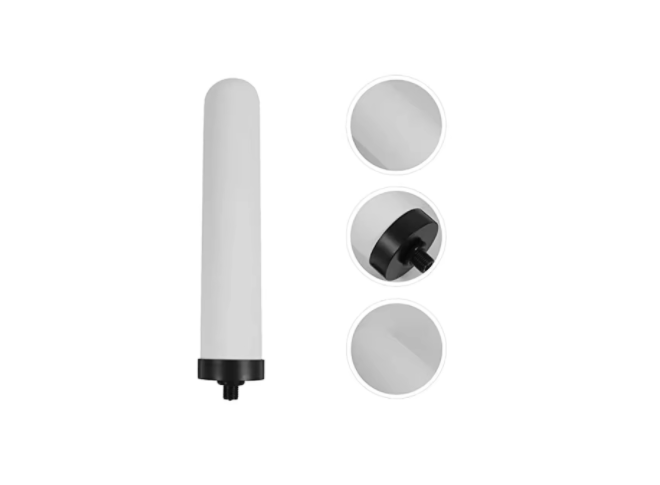
A ceramic filter uses tiny pores on a ceramic surface to filter bacteria and sediment out of drinking water. It is an affordable and versatile water filtration method that can be installed in households or used as a portable filtration device.
A ceramic filtration system uses a natural ceramic media as the heart of a water filtration process. The ceramic filter cartridge, often referred to as a ceramic filter candle, processes the water and removes contaminants through a network of pores. Ceramic filtration systems exist in a variety of applications. They can be gravity-fed, under-sink, countertop, or in some instances, used for a whole house or even light industrial processes.
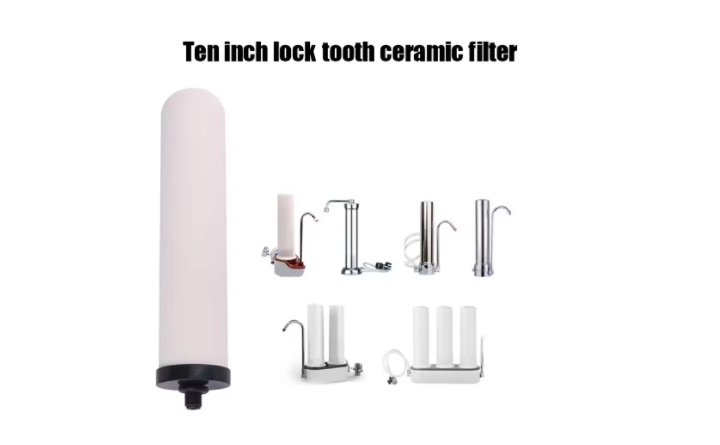
Pore Size: Sub-micron, commonly 0.2, 0.5, or 0.9 microns (absolute or nominal).
Capacity/Life: Generally 1,000 to 2,000 gallons (or 6-12 months).
Operating Pressure: Typically 20–60 psi, with some up to 125 psi.
Flow Rate: Approx. 0.3–0.5 gallons per minute (GPM) or 1 gallon every 1.5 hours.
Material: Diatomaceous earth, often silver-impregnated to prevent bacteria growth.
Temperature Range: Typically 40°F (4°C) to 100°F (38°C).
Contaminant Removal: Bacteria (E. coli), cysts (Giardia, Cryptosporidium), sediment, and some chemical contaminants.