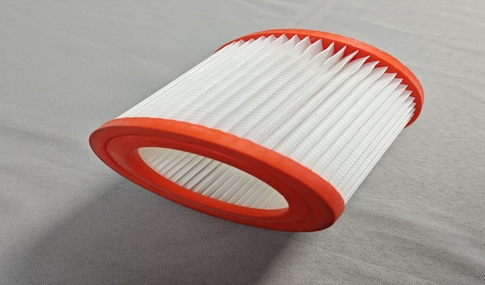
What is Swimming Pool Filter Cartridge?
Pool cartridge filters have the advantages of high filtration accuracy, water saving, and easy maintenance, which helps to extend water circulation time, reduce the use of disinfectants, and reduce operating costs. Common types of cartridge pool filters include: folded filter elements, bag filter elements, sand filter elements, and diatomaceous earth filter elements, which can be selected according to the type of swimming pool, water quality requirements, and budget.
Pool filter cartridges come in a variety of sizes, flow rates, filtration accuracies, and materials (such as polypropylene, stainless steel, polyester, etc.), suitable for residential pools, commercial pools, spas, and other scenarios. Choosing the right filter cartridge can not only effectively improve water quality and save costs, but also extend the life of the equipment and ensure the safety of the pool.
Common Swimming Pool Cartridge Filter Types
1.Pleated Cartridge Filter (PP/PES): The pleated filter cartridge adopts a pleated structure, with a large filtration area and high precision (1-20 microns), which is suitable for terminal fine treatment. The material is resistant to chemical corrosion and is suitable for chlorinated water. The filter cartridge can be cleaned and reused, easy to install, low maintenance cost, no backwashing required, water-saving and energy-saving, and cost-effective.
Suitable for small and medium-sized swimming pools, such as villa swimming pools, gyms, SPAs, and small commercial swimming pools.
2.Sand Filter: When the water with high turbidity enters the sand tank from above and passes through multiple layers of quartz sand or glass sand beds, impurities can be intercepted and removed, thereby achieving a filtering effect. This filter element has a simple structure, low cost, stable operation, and a filter material replacement cycle of up to 2-3 years. It supports automatic or manual backwashing.
It is suitable for scenes with limited budgets or large flow rates, such as public swimming pools, large outdoor swimming pools, and commercial water park swimming pools.
Why do You Need to Clean the Pool Filter Regularly?
Improve user experience
Pool water is easily contaminated by impurities, bacteria, etc. If the filter is not cleaned in time, the water quality will deteriorate, which will affect the comfort and safety of swimmers. For operators, cleaning the filter helps maintain good water quality, improve customer satisfaction and repurchase rate, and enhance brand reputation.
Ensure water quality safety
Swimming pools often contain pollutants such as hair, sand, dander, and grease. If the filter is not cleaned for a long time, it will be blocked, reducing water flow and filtration efficiency, and even causing water quality deterioration. Regular cleaning can keep the system running efficiently and ensure clear and hygienic water quality.
How to Clean Your Pool Filter Cartridge?
Cleaning the pool filter is actually very simple. Just follow the five steps below. The tools you may need include: a water pipe, a plastic bucket and a soft brush.
Step 1: Turn off the pool circulation system, including the water pump and the filtration system, and ensure that it is operated under no pressure.
Step 2: Open the filter housing, remove the top cover, take out the filter, and remember the installation direction of the filter to facilitate subsequent recovery.
Step 3: Check the condition of the filter. If the filter is found to be black, damaged or severely deformed, it is recommended to replace it directly without cleaning.
Step 4: Rinse the filter evenly with a water pipe, and rinse the dirt and impurities between the folds from top to bottom. Avoid using a high-pressure water gun to prevent damage to the filter paper.
Step 5: Rinse thoroughly and dry it. After confirming that it is clean, reinstall it into the system and resume use.
In short, the cleaning of swimming pool filters is crucial in swimming pool operations. Choosing the right cleaning method and regularly cleaning and replacing filters are the key to ensuring water quality and system efficiency, and avoiding unnecessary losses to operations.