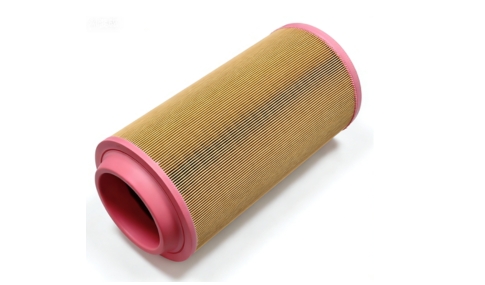
A baghouse dust collector is an air pollution control device engineered to filter and capture particles, and other contaminants from industrial exhaust streams. It uses fabric bags or cartridges to trap particulates while allowing purified flow to pass through.
Baghouse dust collectors serve multiple sectors, including metallurgy, chemical and concrete industries, woodworking, food and tea processing, mining, and the removal of coffee chaff from roasting and grinding operations. These devices are also used in the energy sector, for example, in coal-fired power plants.
Working Principle:
The baghouse dust collector design includes several key components: carbon steel casing, supports and hopper, sleeves, valves, regeneration unit.
How does a baghouse dust collector work? Dust-laden flow is drawn into the equipment through ducts. The gas passes through the bags, typically made from materials like polyester, fiberglass, or PTFE. Particles are captured on the surface of the bags while clean air exits. Over time, a layer of pollution forms on the bag surface, enhancing filtration efficiency but requiring periodic cleaning.
Key Aspects of Baghouse Dust Collectors:
Operation: Dirty air enters a housing, passes through fabric filters where dust is collected on the outside, and clean air exits. Collected dust falls into a hopper for removal.
Cleaning Systems: To prevent clogging, baghouses use various cleaning methods:
Pulse Jet: Compressed air blasts dislodge dust (most common).
Shaker: Mechanical shaking of the bags.
Reverse-Air: A traveling fan blows air in the opposite direction.
Filter Media: Bags can be made of various materials (polyester, Nomex, fiberglass) depending on temperature and chemical resistance needs.
Components: Key components include filter bags/cages, a hopper, a baghouse housing, and an air cleaning mechanism.
Applications: Essential for industries with high-volume dust, such as metal fabrication, woodworking, cement, agriculture, and pharmaceuticals.