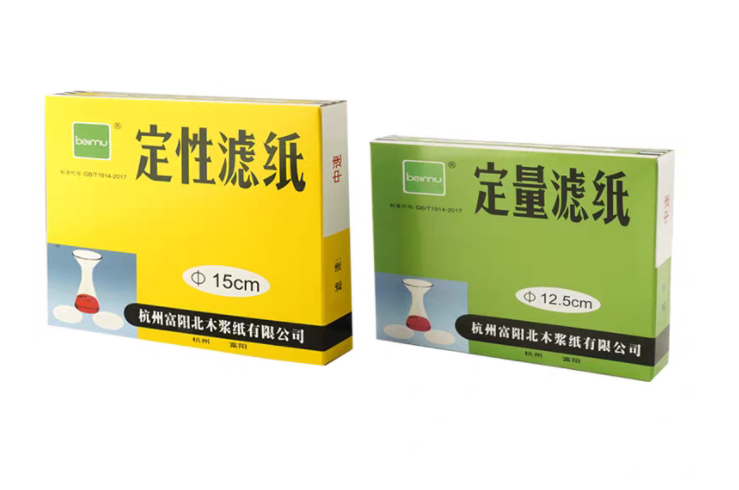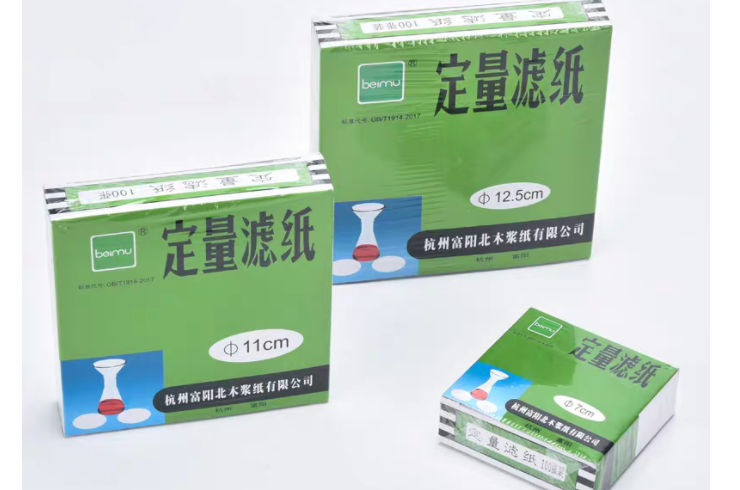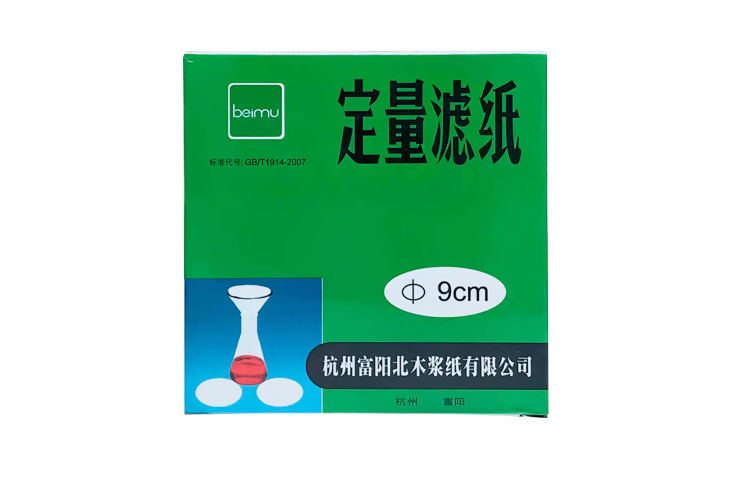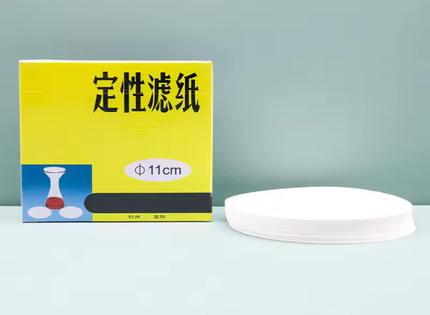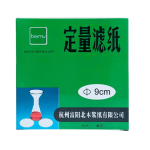
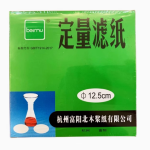
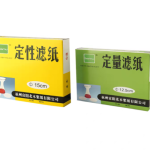
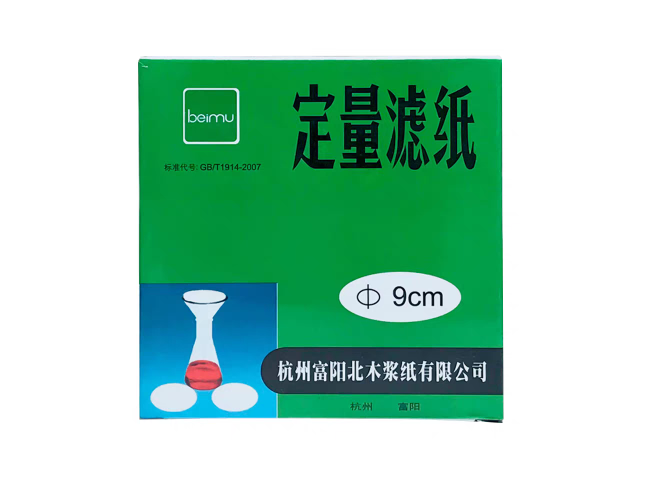
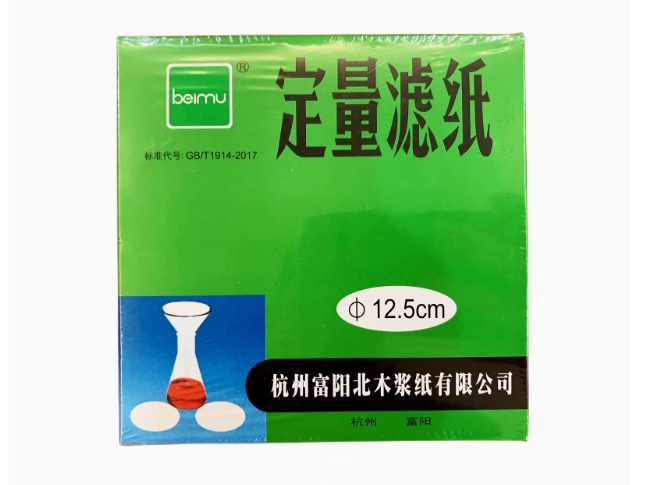
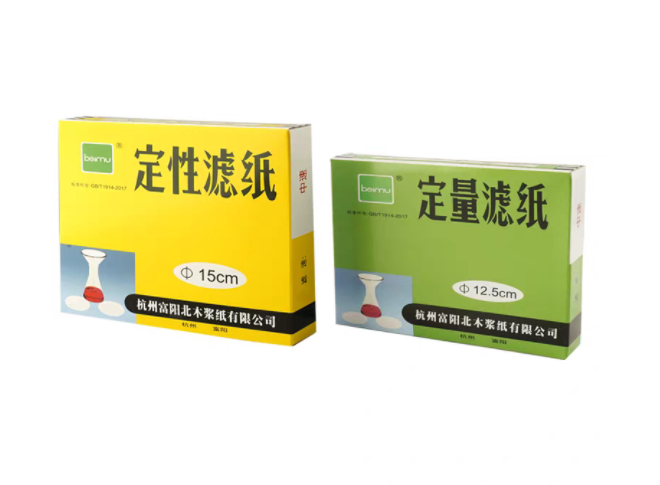
Quantitative filter paper is a high-purity, acid-washed cellulose paper used for precise gravimetric (weighing) and quantitative analysis, featuring extremely low ash content (often <0.01%) so it burns off cleanly, leaving minimal residue to ensure accurate mass measurements of filtered precipitates, unlike qualitative paper used for general separation. It’s tough, often wet-strengthened, and selected based on pore size and ash content for critical lab tasks like particle analysis.
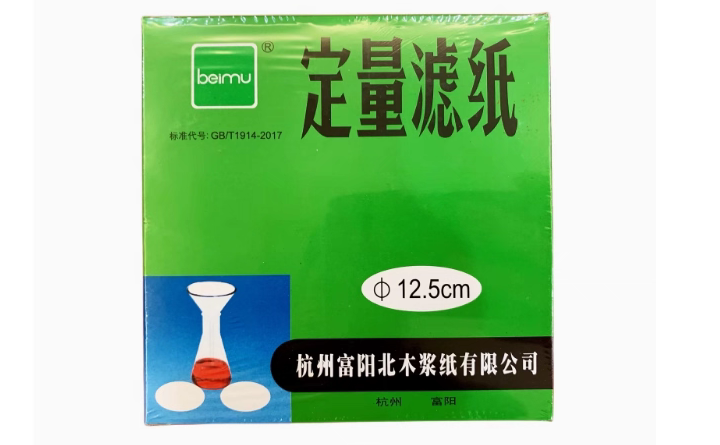
Ash Content: Crucial for quantitative work; very low levels (e.g., <0.007%) ensure minimal residue after ignition, preventing weighing errors.
Particle Retention (Pore Size): Defines the smallest particles retained, varying by grade (e.g., Grade 42 retains 2.5µm, Grade 40 retains 8µm).
Thickness & Basis Weight: Measures paper density and strength (e.g., 200µm, 95-100 g/m²).
Filtration Speed (Flow Rate): Measured in seconds per 100mL (Herzberg method) for consistent filtration time (e.g., 54 sec/100mL).
Material: High-quality cellulose with cotton linters, often acid-washed for purity.